Wood
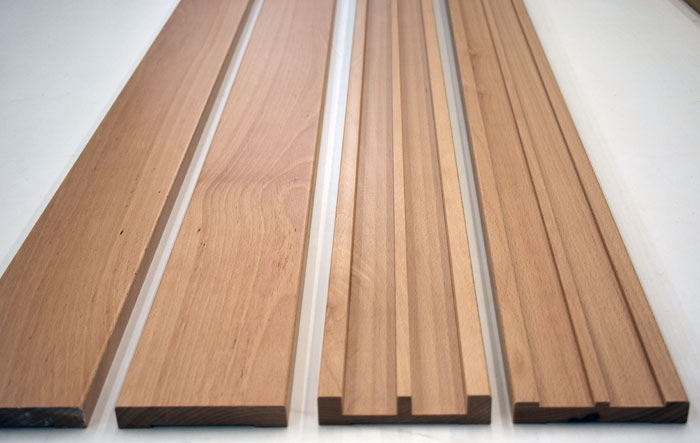
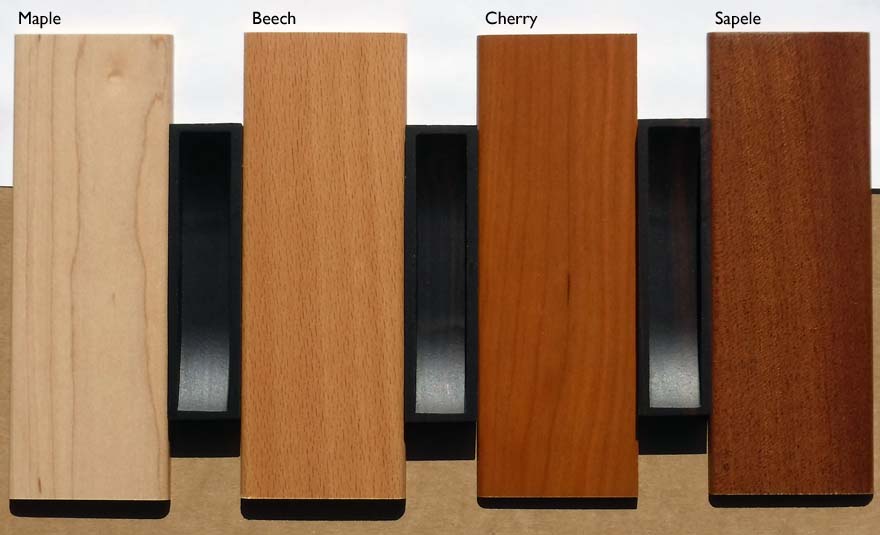
Our current wood of choice for the shoji frame is Beech (certified sustained yield by the Pan European Forestry Certification Council) finished with a clear catalyzed lacquer for ease in cleaning and durability. Sapele, Cherry, and Maple are also available.
For the kumiko (grid pattern) we use the same wood as the frame, oil finished and then burnished smooth.
All shoji are built double-sided with full 1 3/8" thick frames.
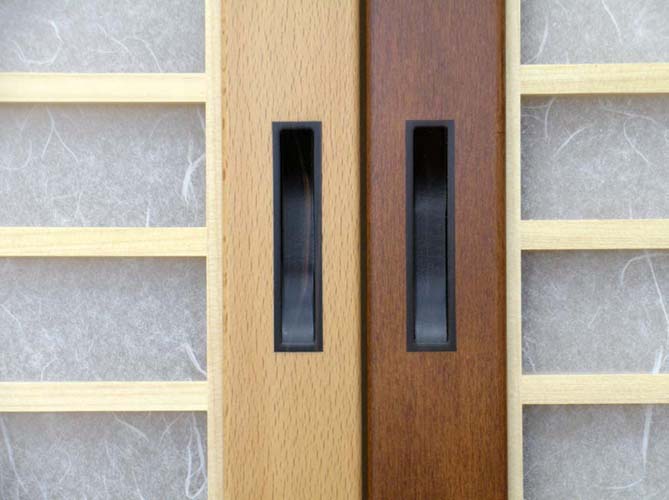
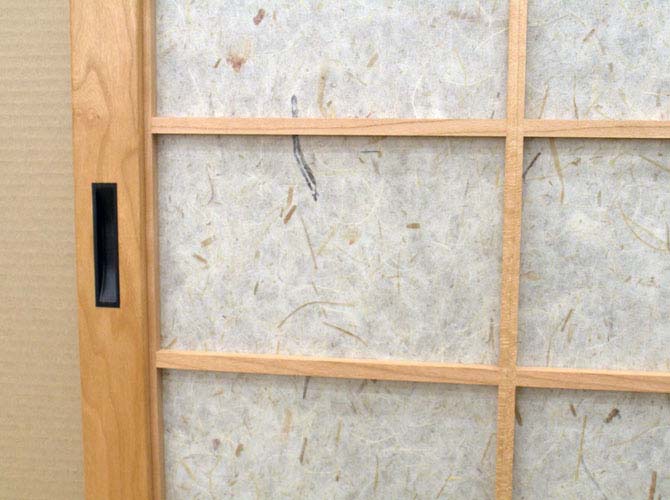
Wood samples below shown next to Ebony door pulls for color comparison. All wood species will vary somewhat in grain and color. Freshly milled Cherry will darken to the color shown in a few months.
Kumiko Styles
Our shoji are double sided, meaning kumiko (grid pattern) on both sides of the shoji paper for strength and support.
Please see the Kumiko Style sheet for a small sample of kumiko options
Japanese Shoji Papers - Warlon
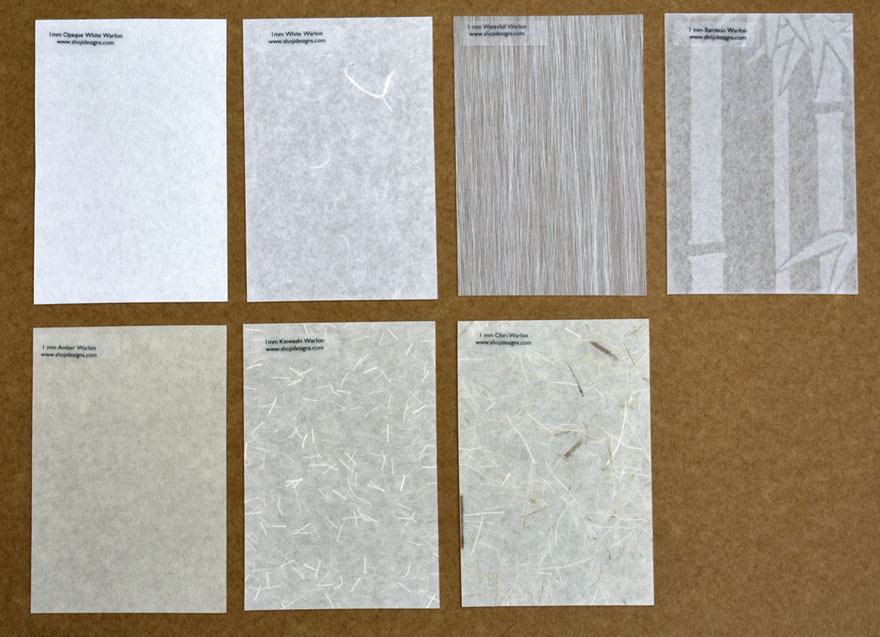
Warlon shoji paper is Japanese washi paper with a plastic resin laminated on each side. It's very durable and is washable. For shoji screens we use a 1 mm thick material in the options below. If you cursor over the image it will change to show the Warlon on a black background. The samples that look brighter in the pictures are less translucent, more reflective. We have some Warlon laminated papers in different thicknesses for sale on the Warlon paper page for your home projects. There are close up Warlon pictures on that page also.
Tracking Systems
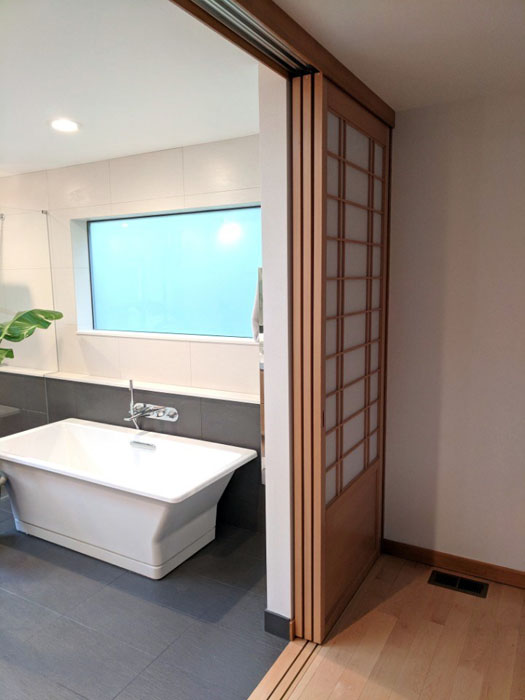
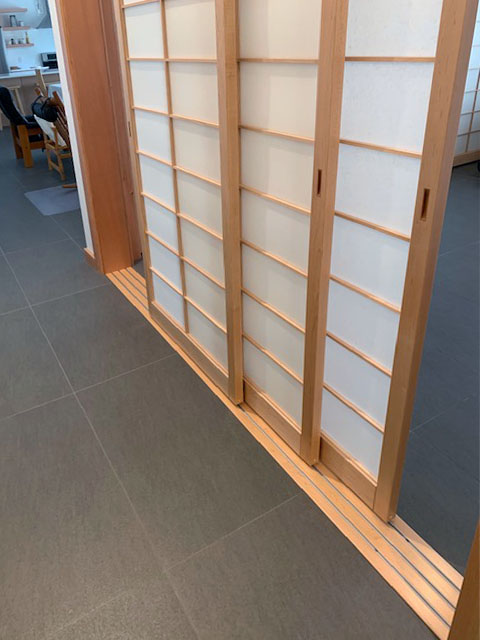
Shoji screens can be tracked in two ways. They can slide in upper and lower wood tracking or hang from metal roller tracking overhead.
- Wood Tracking
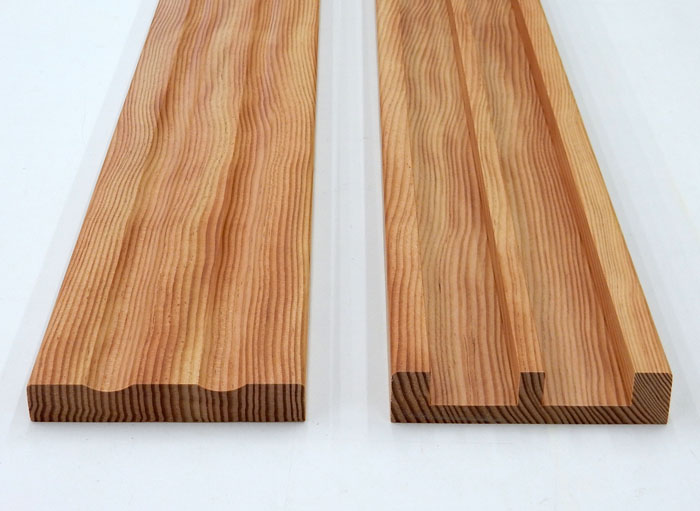
Wood tracks are traditional, aesthetic and completely serviceable if
given an occasional coat of paste wax and kept clean.
The lower track can be made from the same material as your wood floor, inlaid and finished
to match; or a pre-finished lower track can be used where carpet abuts on either side. (We use a special catalyzed commercial floor finish on our lower tracks.
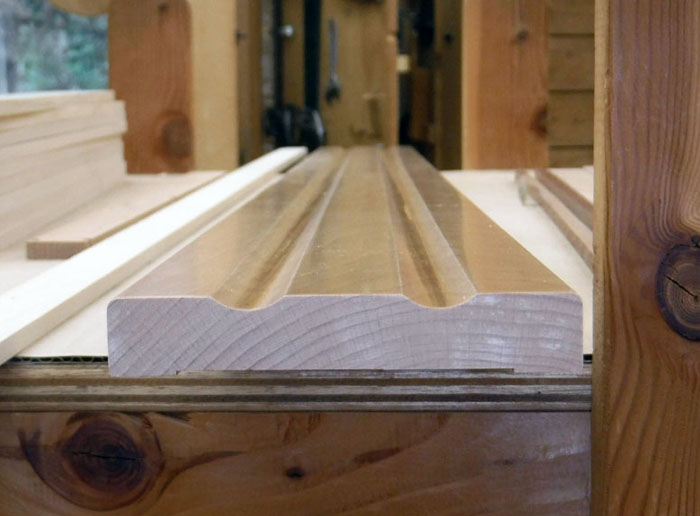
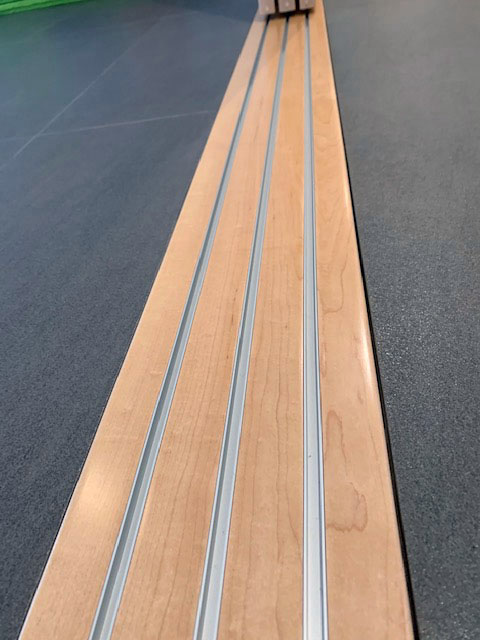
Our lower tracks have a thumbnail shaped groove that's easy on bare feet and easy to clean. The screens have Teflon glides that slide in this groove.
- Aluminum Roller Tracking
Metal overhead roller tracks are useful in many applications. This is a good solution when carpet, tile or hardwood extends into a closet and you want to avoid inlaying a floor track.
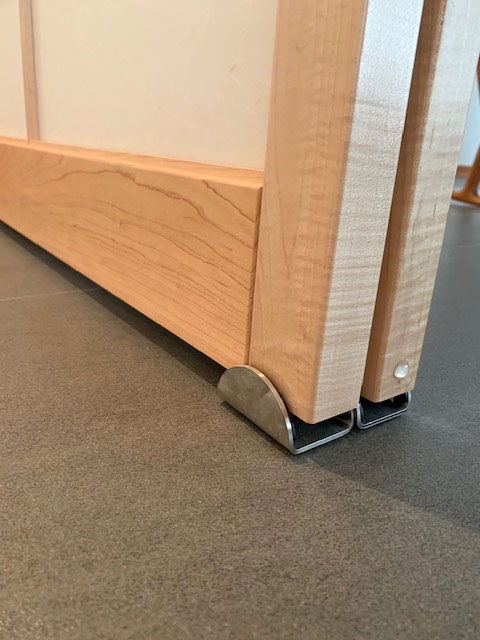
An adjustable set of rollers is fastened to the top of each shoji screen. These rollers run captive in an aluminum track and cannot jump off the track or become jammed. The shoji is guided at the floor with an attractive 'half moon' shaped guide.
When the shoji need to travel a greater distance than just their width, we use a wood floor track with a 3/8" inlaid aluminum channel. Spring-loaded guide pins in the bottom edge of each shoji engage the channel and stabilize the bottom of the doors.

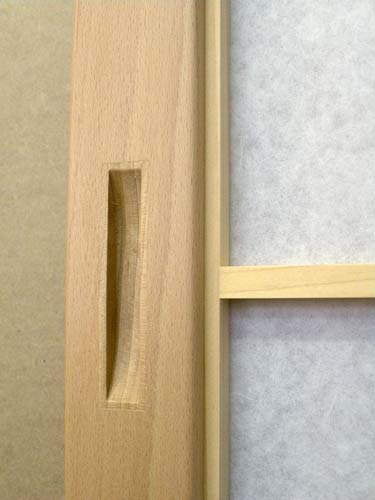
Imported from Japan. We offer them in Ebony and Japanese Cherry (very light pinkish brown). These are carefully hand-inlaid into the shoji frame, not attached to the surface.
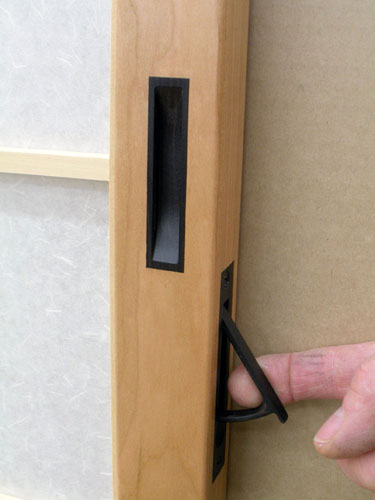
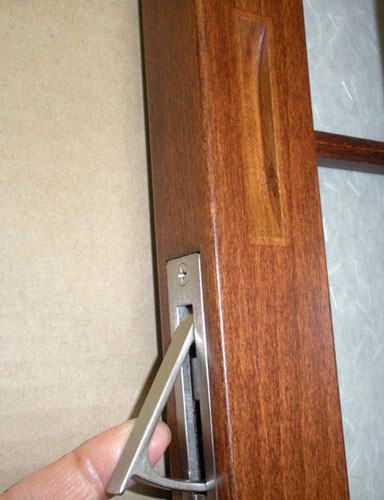
For shoji pocket doors, either a touch latch or an inlaid edge pull is installed for extracting the door from its pocket. We use the Baldwin edge pulls that comes in a variety of finishes - Oil rubbed bronze and satin nickel finishes pictured below.
For door pull sizes and pricing go to the bottom of the shoji paper page.
Door Panels
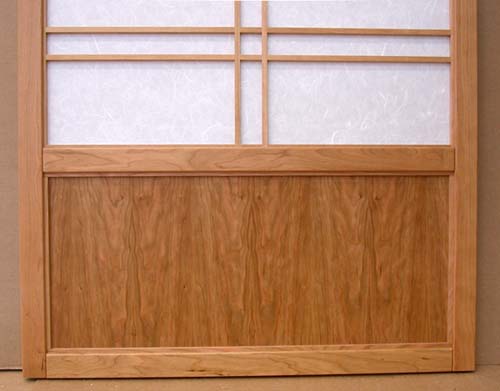
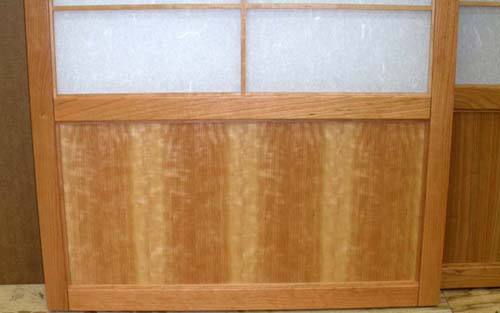
Clients often request a solid lower panel or kick board in their shoji for pet and child proofing or for appearance. We sometimes use them to help stiffen a particularly tall or wide shoji door.
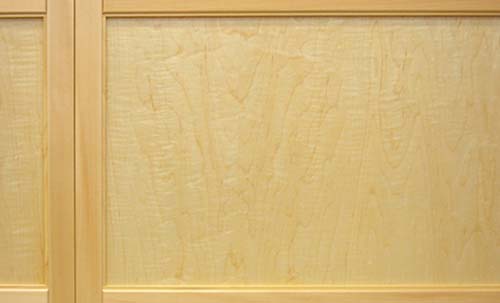
Our standard panel woods are vertical grain Beech, Cherry, Maple or Sapele.
|